Richmond Park area man with van for large item removals
Posted on 02/06/2026
If you need a Richmond Park area man with van for large item removals, you are probably dealing with the awkward stuff: a wardrobe that will not fit in the car, a sofa that needs two people, a dining table with sentimental value, or a bulky item that simply cannot wait. That is where a sensible, local man and van service earns its keep. It is not just about having a vehicle. It is about having the right lifting help, a practical route plan, and enough care to move large items without turning the day into a headache.
Richmond Park is a beautiful part of London, but it also brings its own practical quirks. Access can be tight in places, parking can be tricky, and larger items often need careful handling through older properties, flats, gated drives, or shared entrances. In this guide, we will break down how the service works, when it makes sense, what to ask before you book, and how to avoid the small mistakes that can make a simple move feel much bigger than it should. Truth be told, most large-item moves are not complicated; they just need proper planning.
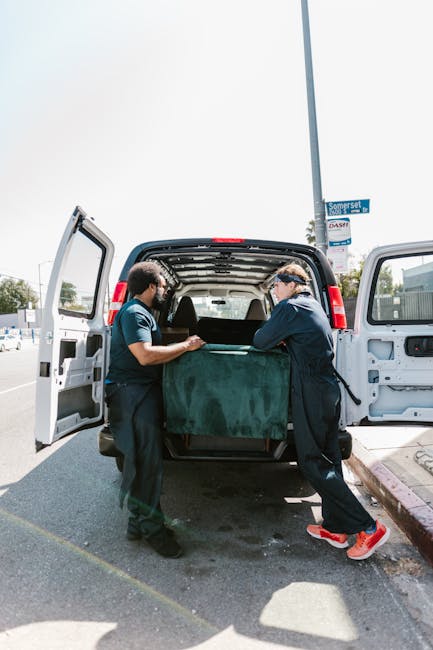
Why Richmond Park area man with van for large item removals Matters
Large item removals are one of those jobs that look easy from a distance and then suddenly get awkward the moment you try to move a mattress down a narrow staircase. Around Richmond Park, that matters even more because homes vary so much: period houses, modern apartments, split-level properties, and homes with limited front access. A good local man with a van service helps bridge the gap between "I can probably manage this" and "this is definitely a two-person job".
It matters for another reason too. Large items are often the most expensive or difficult things to replace. A chipped sideboard, a scratched piano casing, or a damaged wardrobe door can be more trouble than the move itself. The right service reduces that risk by using proper lifting methods, blanketing, straps, and sensible loading order. You do not want a sofa rolling against a fridge because someone guessed the van space a bit too optimistically. Happens more than people think.
There is also the time factor. If you are clearing a room for decorators, moving a tenant changeover, or getting an item out before storage or disposal, delays quickly cascade. A local, responsive service is often the difference between a smooth afternoon and a very long evening.
Expert summary: For large item removals, the real value is not only transport. It is safe handling, practical planning, and enough local know-how to avoid access problems before they turn into damage or delay.
If you are comparing your options, it can help to look at the wider support available on the services overview and then narrow down to the specific move type you need, such as furniture removals or man with a van support in the Kingston area. That gives you a better sense of fit before you book.
How Richmond Park area man with van for large item removals Works
The process is usually straightforward, but good removals work is all in the details. A typical booking starts with a brief description of what needs moving: item type, size, floor level, access restrictions, and whether there are stairs, lifts, or tight corners. From there, the provider can judge vehicle size, manpower, and the approximate time required.
For large item removals, the most useful information is often the least glamorous. Is the wardrobe already disassembled? Does the sofa have detachable feet? Is the bed frame boxed or loose? Can the item be carried straight out, or will it need twisting through a hallway with a coat rack, a hallway radiator, and about three inches to spare? Those little things matter more than people realise.
On the day, the job usually follows a familiar pattern:
- Arrival and quick access check.
- Protection of the item and surrounding surfaces where needed.
- Careful lifting and carrying, usually by two people for anything bulky or heavy.
- Secure loading into the van using straps and stable positioning.
- Delivery, placement, and, where agreed, reassembly or room placement.
Some jobs are one-stop simple. Others need a bit of choreography. A piano, for example, is not the same as a bookcase, and a bulky wardrobe does not behave like a boxed washing machine. If your item needs a little more specialist handling, a dedicated option such as piano removals can be more suitable than a standard lift-and-go arrangement.
For time-sensitive jobs, you may also want to compare a standard booking with same day removals. Sometimes that flexibility is exactly what saves the day.
Key Benefits and Practical Advantages
A well-run man with van service for large items is popular because it solves several problems at once. You get transport, loading help, and local route awareness in one package. That sounds obvious, but the value is in how much hassle it removes.
- Less strain on you: Heavy lifting is where people hurt backs, nick walls, and twist fingers. A proper crew takes that pressure off.
- Better protection for large items: Large furniture often needs blankets, straps, and careful angling through doorways.
- Practical vehicle sizing: You do not need a giant removals truck for every job. Sometimes a smaller removal van is the smarter fit.
- Faster turnaround: A planned move is usually much quicker than trying to improvise with friends and a borrowed estate car.
- Lower stress: Let's face it, the emotional benefit matters too. Few people enjoy watching a sofa wedge itself in a staircase.
There is also a subtle but important efficiency gain: a local service can often group tasks more intelligently. If you are moving one awkward item from a flat, or a small set of furniture from a house, it may be cheaper and easier than a full-scale removal. For smaller, flexible moves, many people compare man and van support with a broader removal services package to find the sweet spot.
One more practical point: a proper service is often easier to fit around your day. That matters if you are collecting an item from a shop, a storage unit, a relative's home, or a property that has to be cleared by a certain time. In the real world, timing usually decides whether a move feels calm or chaotic.
Who This Is For and When It Makes Sense
This service is ideal if you need to move one or two large items rather than an entire household. That includes sofas, wardrobes, dining tables, white goods, beds, desks, shelving, exercise equipment, and similar bulky pieces. It can also work well for mixed jobs where a few large items need to be moved alongside boxes and smaller belongings.
It makes particular sense for:
- homeowners replacing furniture
- tenants moving out of flats or shared houses
- students with bulky items at the end of term
- landlords clearing a property
- small businesses moving office furniture
- families sending items into storage
If you are managing a flat move, the practical side can be deceptively tricky, so a dedicated flat removals option may be more appropriate than a very general transport booking. Likewise, office desks and filing cabinets are a different beast altogether, and it is worth considering office removals where the job includes business equipment and time-sensitive access.
It may not be the right fit if you have a large multi-room property move, fragile specialist items, or a long-distance relocation with many boxes and furniture pieces. In those cases, a broader house removals service can be better value and easier to coordinate. A good provider will be honest about that, and honestly, that honesty is a good sign.
Step-by-Step Guidance
If you want the move to go smoothly, follow a simple process. It sounds basic, but this is where the headaches are prevented.
1. Identify the item clearly
Write down what you are moving and measure it if possible. Height, width, depth, and approximate weight are all useful. If the item can be dismantled, note that too. A wardrobe in flat-pack form is a very different job from a fully assembled one.
2. Check the access route
Look at doors, hallways, stairs, lifts, outdoor steps, and parking. In Richmond Park and nearby roads, access and parking can be the part that makes or breaks the job. If a van cannot stop close enough, the team may need extra time for carrying.
3. Decide whether the item needs disassembly
Some furniture should come apart before moving. Beds, wardrobes, and certain tables are usually easier and safer if they are partially dismantled. Keep screws and fittings in labelled bags. Small thing, big relief later.
4. Ask about loading protection
Blankets, straps, wrapping, and corner protection all reduce the risk of scratches and scuffs. If your item has glass, polished wood, or delicate finishes, that detail matters more than a glossy sales pitch.
5. Confirm timing and arrival window
Large-item moves are often quicker than full removals, but only if the plan is clear. Ask when the team is likely to arrive, how long the job should take, and what could add time. It is better to know in advance than to guess.
6. Prepare the space
Clear the hallway, move loose rugs, and make sure pets and children are somewhere safe and out of the flow. If there is a tricky turn or a narrow doorway, move ornaments and wall art well out of the way. That little bit of preparation goes a long way.
7. Walk through the handover
Before the item is loaded, point out any fragile spots, damage already present, or delivery instructions. At the destination, guide placement carefully. If the item needs to go upstairs or into a specific room, say so clearly before lifting starts.
Expert Tips for Better Results
In our experience, the best large-item removals are the ones where someone spent ten minutes thinking like a mover before the van turned up. That is really the secret.
- Measure doorways as well as furniture: A sofa might be short enough, but the angle through the hall could still be awkward.
- Use the room-to-room method: Imagine the item's path from start to finish. If it has to pivot around a banister, plan for that.
- Take photos in advance: Pictures help the provider understand the size and shape of the item, especially if it has odd dimensions.
- Prepare protective materials for the home: Old blankets, card, or floor protection can help in tight interior spaces.
- Do not overpack the van: One heavy item can damage another if it is forced in beside it. Space is part of the safety plan.
- Ask what happens if access changes: Sometimes the lift is out, parking is further away than expected, or the item is bigger than anticipated. A good team will talk through that calmly.
If you want to be even more prepared, a practical packing and loading discussion can help. For anything involving awkward furniture, it is worth looking at packing and boxes guidance as part of the move planning. And if you need broader local insight into how removals are approached, the removals page is a useful starting point.
Small tip, maybe obvious, but it saves arguments: agree in advance whether the item is going to the curb, the front room, the second-floor landing, or a storage unit. Nobody enjoys that awkward pause at the doorstep.

Common Mistakes to Avoid
The most common mistakes are rarely dramatic. They are little assumptions that snowball.
- Underestimating the size: A wardrobe can look manageable until you meet the staircase.
- Assuming two people is always enough: Some items need more hands, more care, or both.
- Ignoring access restrictions: Parking, loading bays, permits, and road layout all affect the job.
- Forgetting to dismantle furniture: Leaving beds or tables fully assembled can add risk and time.
- Not checking insurance and safety practices: This is not the sexy part, but it is one of the most important.
- Booking only on price: A very cheap quote that ignores access, wrapping, or lifting help can cost more later.
Another mistake is treating every large item like a standard parcel. It is not. A fridge freezer is heavy in a different way from a marble-topped table, and a piano is a completely different conversation again. That is why good providers ask questions first. If they do not ask enough, be a little wary.
Tools, Resources and Recommendations
You do not need a warehouse of equipment to move a large item well, but a few practical tools make a big difference. The exact kit depends on the item and the building, yet the basics are consistent.
| Tool or item | Why it helps | Best used for |
|---|---|---|
| Furniture blankets | Protects surfaces from scratches and knocks | Wood furniture, polished pieces, sofas |
| Ratchet straps | Stops items shifting during transit | Heavy or tall furniture, mixed loads |
| Tape and labelled bags | Keeps fittings together after disassembly | Beds, wardrobes, tables |
| Gloves with grip | Improves handling and reduces slips | Most lifting jobs |
| Floor protection | Helps protect hallways and entrance areas | Shared entrances, tight homes, flats |
For route planning, the most useful "resource" is still a clear description of the property and item. A good removal team will pair that with practical experience. If you want to understand how the business presents its wider standards, the pages on insurance and safety and health and safety policy are worth a look. They are not exciting reads, fair enough, but they matter.
For move timing and budgeting, checking pricing and quotes before you book can help set expectations, especially if access is tight or if there are multiple bulky items. And if you need reassurance on payment handling, the payment and security information adds another layer of trust.
Law, Compliance, Standards, or Best Practice
For a local man with van job, the main compliance concerns are usually about safe lifting, road use, secure loading, fair trading, and proper care of property. You are unlikely to need to get into legal complexity for a single large-item move, but a professional provider should still operate with care and consistency.
At a practical level, best practice means:
- using safe lifting techniques and enough manpower for the item
- loading in a way that prevents movement during transit
- being clear about what is included in the service
- checking access issues before arrival where possible
- handling items and property with reasonable care
- being transparent if an item needs specialist handling
It is also sensible to confirm what happens if the item cannot be moved as expected. For example, if it is heavier than described or access is impossible without extra help, a fair provider should explain the options rather than forcing the job. Clear terms matter. So do complaints processes if something goes wrong, which is why a visible complaints procedure can be a useful trust signal rather than just a formality.
For broader business values, some readers also like to know whether a company has stated policies around accessibility, sustainability, and ethical practice. Those pages are not just paperwork; they tell you how the company thinks. You can see examples of that thinking through the recycling and sustainability information and the about us page.
Options, Methods, or Comparison Table
If you are unsure which option is right, compare the job type rather than the label. "Man with a van" can cover a lot of ground, but not every booking is the same. Here is a simple way to think about it.
| Option | Best for | Typical strengths | Watch out for |
|---|---|---|---|
| Man with a van | One to a few large items | Flexible, quicker to arrange, practical for local jobs | May not suit very heavy, complex, or multi-item moves |
| Removal van only | Transport when loading is already handled | Simple vehicle-only support | You may still need lifting help elsewhere |
| Full removals service | Households, flats, or larger loads | More manpower and coordination | Can be more than you need for a single item |
| Specialist item removal | Pianos or unusually delicate items | Designed for riskier, more valuable pieces | Usually requires more planning |
That is why many people choose a targeted service rather than a one-size-fits-all approach. If you are handling a single sofa, a statement chair, or a dining set, a focused option may be enough. If the move includes several large pieces plus boxes, you may be better served by a larger package such as removal companies support or a fuller local move plan.
For people balancing cost against convenience, a small move can sometimes sit between DIY and a full removal team. That middle ground is exactly where a strong local man and van service tends to shine.
Case Study or Real-World Example
Here is a realistic example. A household near Richmond Park needed to move a large corner sofa, a glass coffee table, and a king-size bed frame out of a first-floor flat before new flooring was fitted. The access was not dramatic, but it was annoying in the usual London way: a narrow hallway, a turn on the stairs, and limited space outside for loading.
The move worked because the preparation was sensible. The bed was dismantled the night before, fixings were bagged and labelled, the hallway was cleared, and parking was checked ahead of time. The sofa was measured and compared to the staircase width, and blankets were used around contact points. The van was loaded so the glass table could sit safely away from heavier items.
The whole thing was done without damage and without a last-minute scramble for extra help. Nothing magical. Just clear information, the right vehicle, and a crew that knew what to look for before lifting started. That is usually how smooth removals happen, even if the day itself feels a little messy.
A similar approach is especially useful for moves where delays would cause a knock-on problem, such as an incoming delivery, a decorators' start time, or a tenancy deadline. If timing is tight, reading about same-day availability for house removals can give you a sense of how flexible local moving support can be when the schedule is unforgiving.
Practical Checklist
Use this checklist before booking or on the morning of the move. It is simple, but it saves stress.
- Measure the item and note any awkward dimensions.
- Check whether it can be dismantled safely.
- Measure doors, stair turns, and lift access.
- Confirm parking or stopping access near the property.
- Tell the provider if there are stairs, tight corners, or fragile surfaces.
- Remove loose items, shelves, cushions, and fittings from the furniture.
- Label screws, bolts, and small parts in separate bags.
- Protect floors and nearby walls if the route is tight.
- Confirm whether the item is going to another address, storage, or disposal.
- Make sure someone is available to receive the item at the destination.
If you are arranging a bigger move around the same time, it can also be useful to review storage options and whether temporary holding is needed. Sometimes that is the clever bit, not the move itself.
Conclusion
A Richmond Park area man with van for large item removals is a practical solution for people who need bulky furniture or awkward items moved with less stress and more control. It works best when the job is clearly described, access is checked in advance, and the service is chosen for the actual task rather than the broadest label available. That sounds straightforward, and mostly it is. The difference is in the planning.
Whether you are moving a sofa, a wardrobe, a table, or a single treasured item that simply needs a careful pair of hands, the right local support can make the whole process feel lighter. Less lifting, less guesswork, fewer nasty surprises. And on a busy day, that is worth a lot.
Get a free quote today and see how much you can save.
When the heavy lifting is handled properly, you get to keep your energy for the things that matter more. That is the real win.